
Introduction to Big Data   47-slide PPT PowerPoint presentation slide deck (PPTX)
$29.00

Introduction to Big Data (47-slide PPT PowerPoint presentation slide deck (PPTX)) Preview Image
Log in to unlock full preview.
Introduction to Big Data (47-slide PPT PowerPoint presentation slide deck (PPTX)) Preview Image
Arrow   Click main image to view in full screen.

Introduction to Big Data (PowerPoint PPTX Slide Deck)

PowerPoint (PPTX) 47 Slides

Top 1,000 Best Practice $29.00

Add to Cart


Immediate download
Fully editable PowerPoint
Free lifetime updates

BENEFITS OF THIS POWERPOINT DOCUMENT

  1. Understanding Big Data
  2. Sources of Big Data
  3. Dimensions of Big Data

BIG DATA PPT DESCRIPTION

Editor Summary Introduction to Big Data is a 47-slide PowerPoint presentation by Arbalest Partners that explains the evolution, sources, dimensions, and applications of big data. Read more

This document is a part of the Big Data Primer containing 7 chapters providing Overview of Big Data, its dimensions, ecosystem, applications, challenges & concerns, sentiment analysis and Gamification.
In the first chapter titled "Introduction to Big Data" following content is discussed -
Brief History of Data
Changing Landscape of Data
What is Big Data?
Sources of Big Data
Dimensions of Big Data

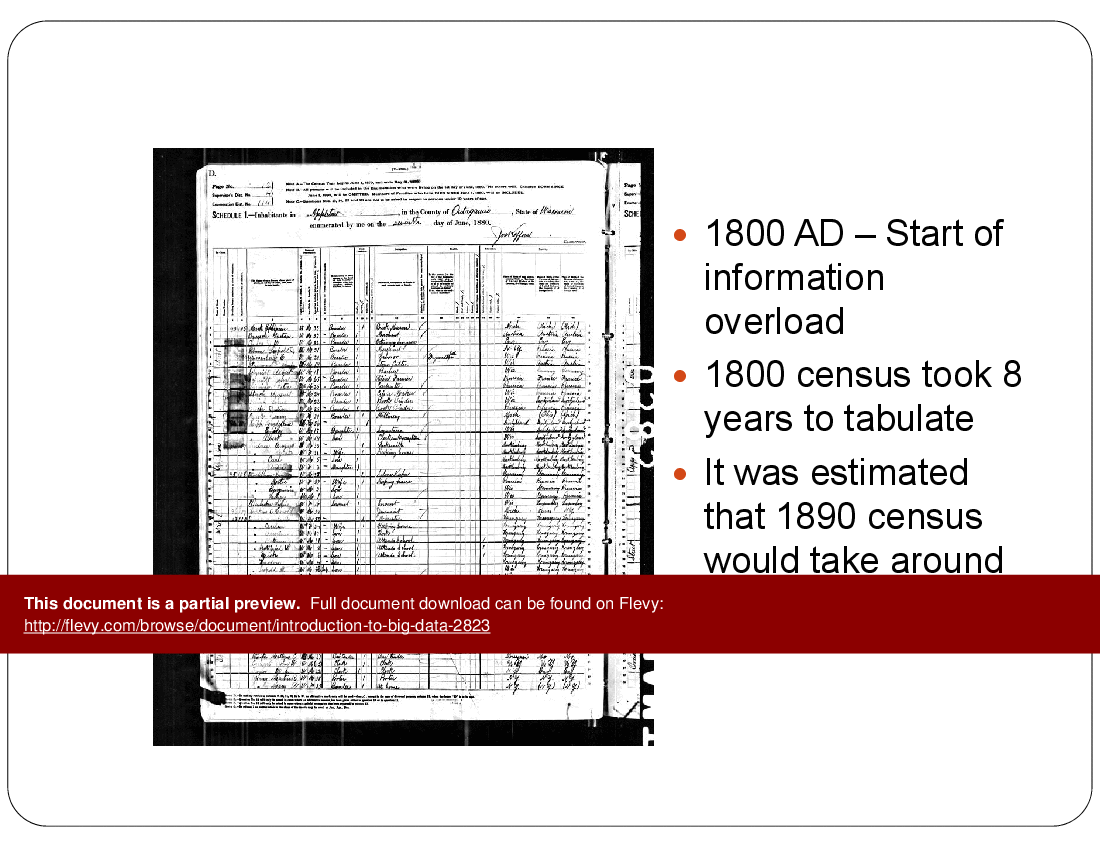
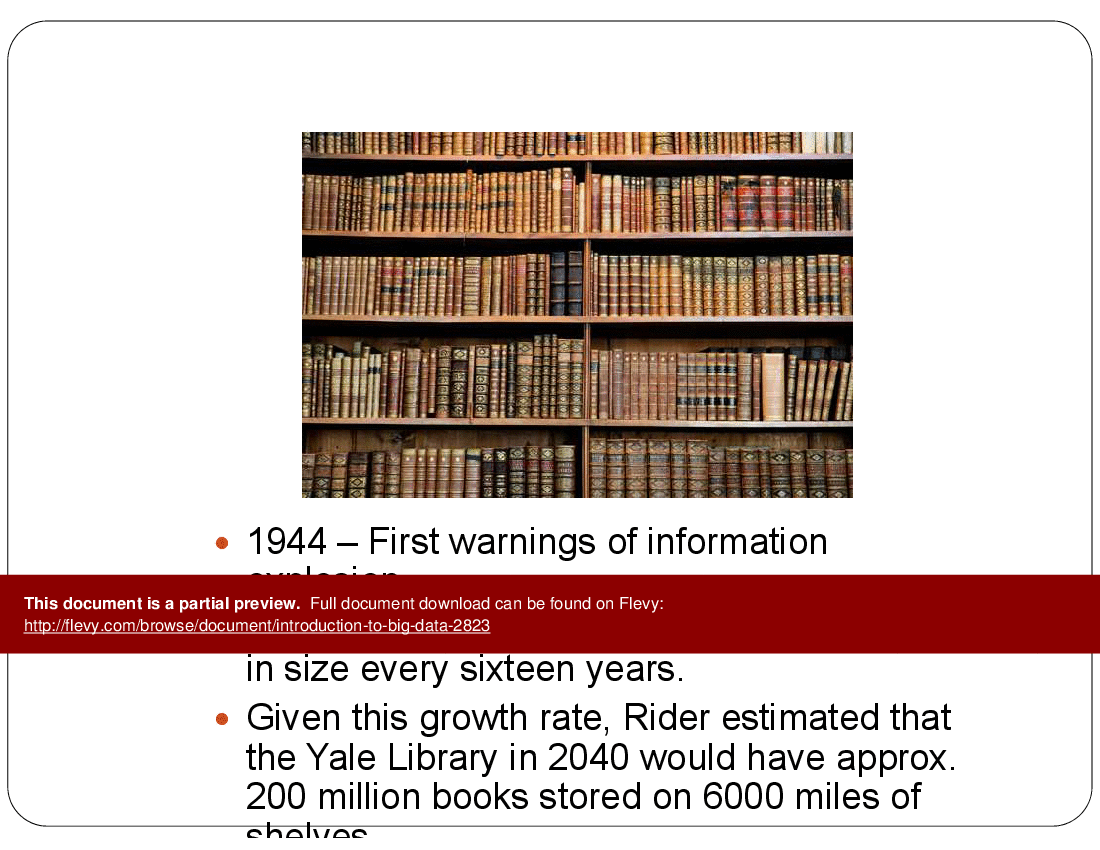
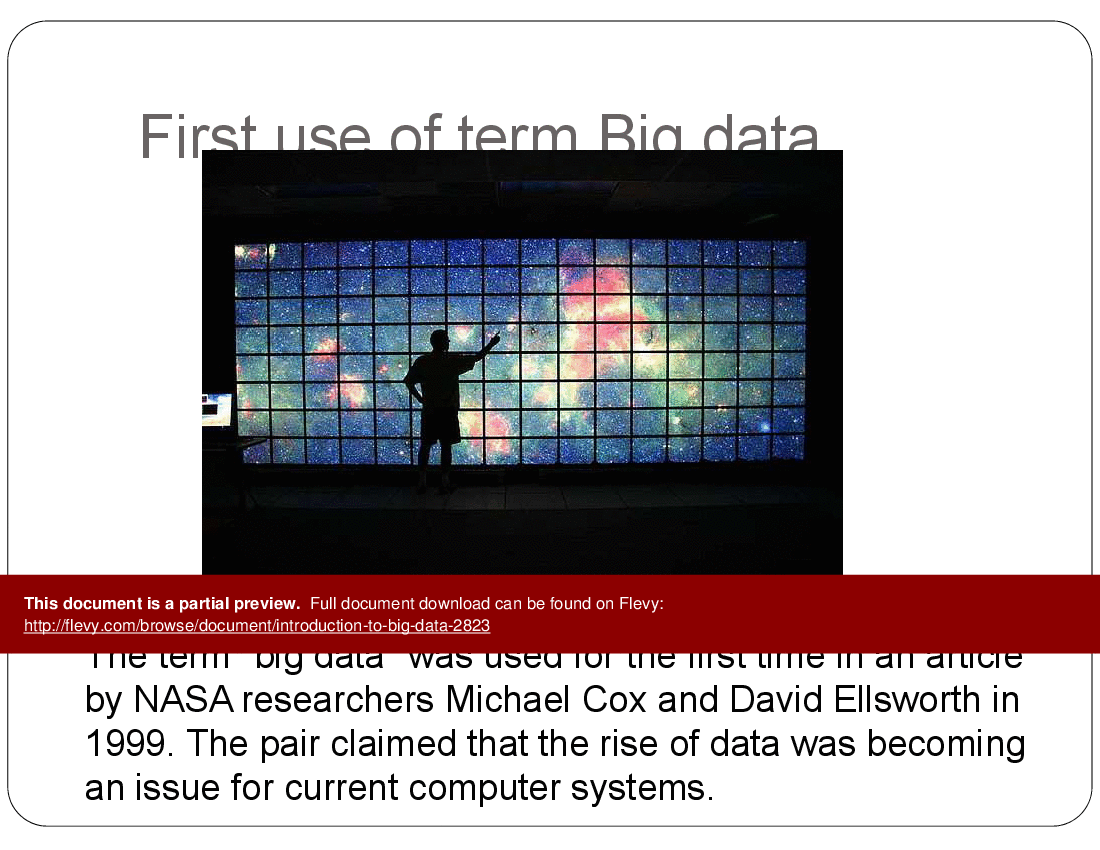
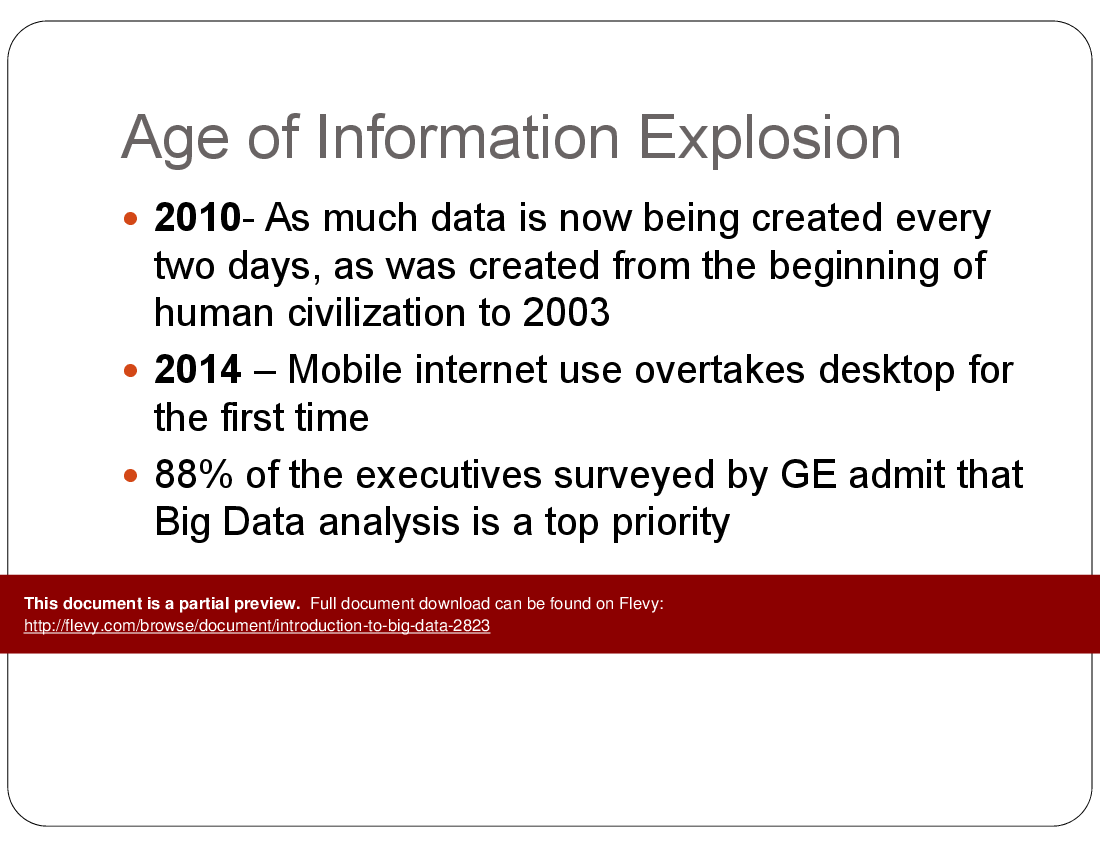
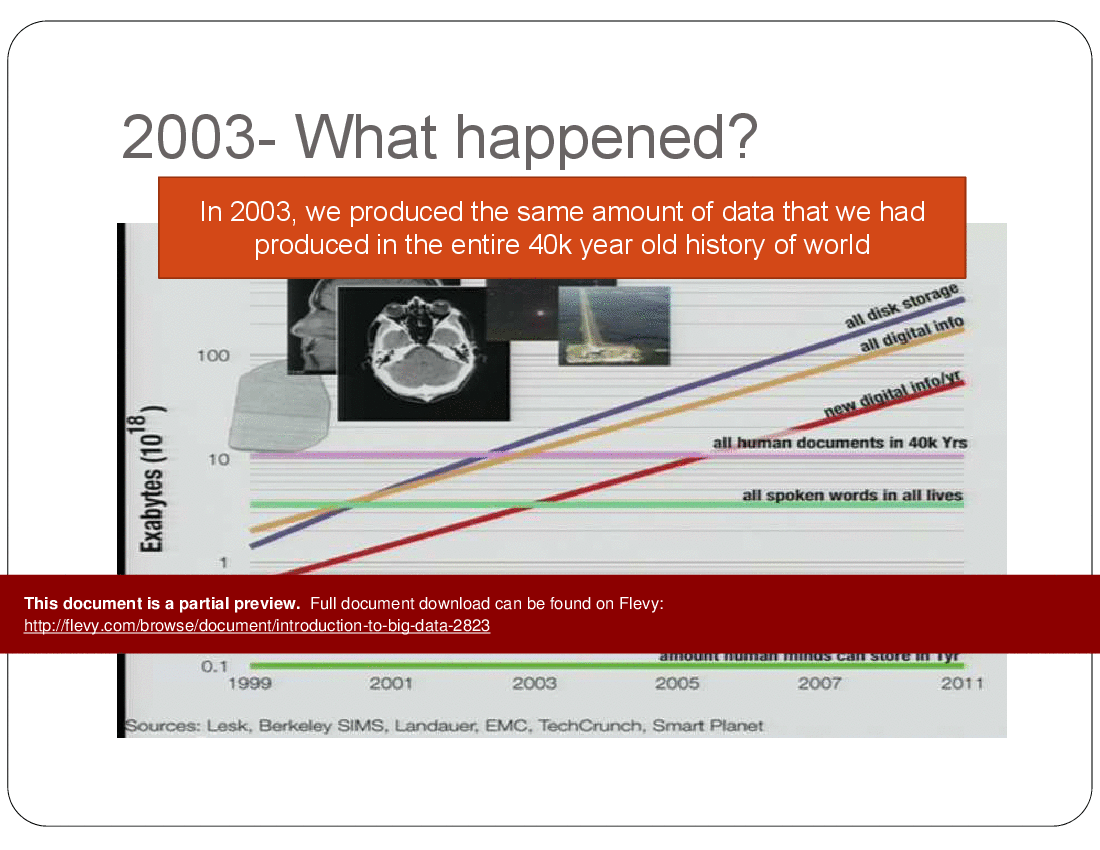
This presentation delves into the historical evolution of data, highlighting key milestones such as the 1800 census and the first warnings of information overload in 1944. It underscores the exponential growth of data, with projections for the Yale Library and the first use of the term "Big Data" by NASA researchers in 1999. The PPT also discusses the age of information explosion, noting significant events like the overtaking of mobile internet use over desktops in 2014 and the prioritization of Big Data analysis by 88% of surveyed executives.

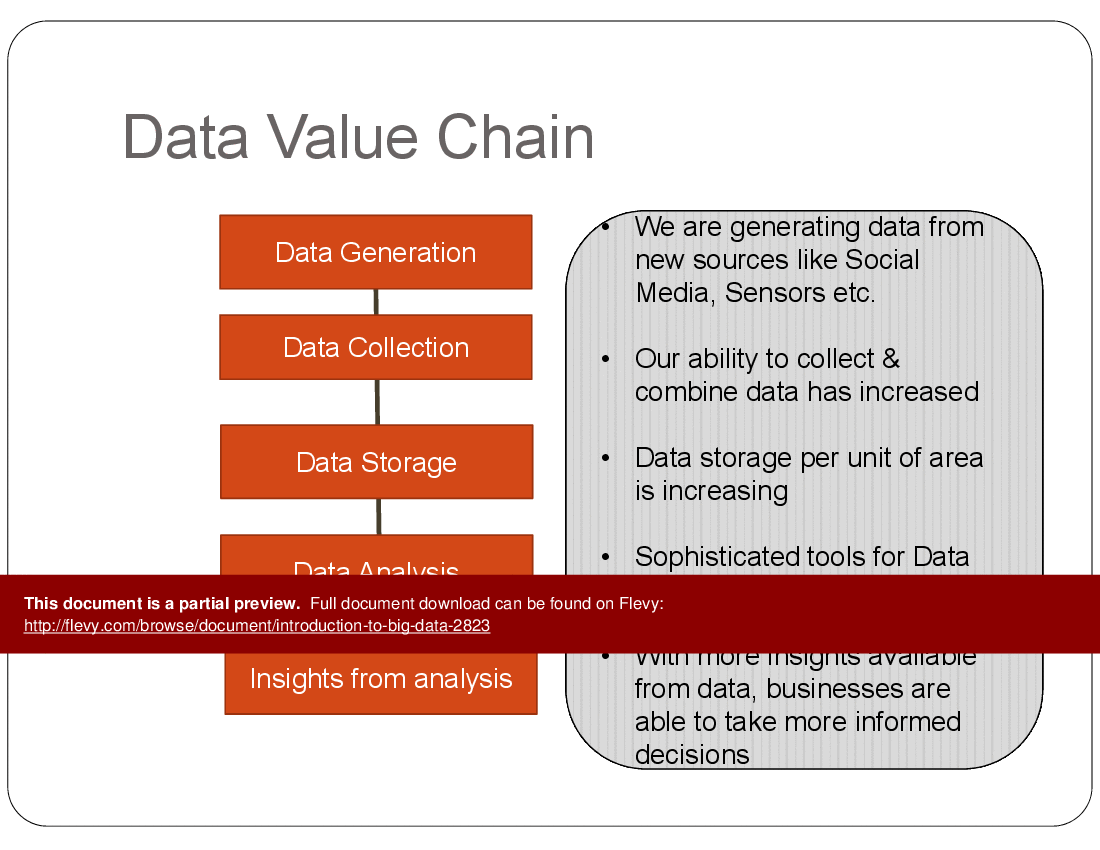
The presentation also covers the data value chain, from generation to insights, emphasizing the increased ability to collect and combine data from new sources like social media and sensors. It outlines the differences between structured and unstructured data, providing examples of each and their respective storage methods. The document also lists various sources of Big Data, including archives, machine logs, sensors, social media, software applications, and public sources.

The document concludes with a forward-looking perspective on the future of Big Data storage, referencing innovative ideas such as storing data in DNA. This comprehensive overview equips executives with a solid understanding of Big Data's history, current landscape, and future trends, making it an essential resource for those looking to stay ahead in the data-driven business world.

Got a question about the product? Email us at support@flevy.com or ask the author directly by using the "Ask the Author a Question" form. If you cannot view the preview above this document description, go here to view the large preview instead.

MARCUS OVERVIEW

This synopsis was written by Marcus [?] based on the analysis of the full 47-slide presentation.


Executive Summary
The "Introduction to Big Data" PowerPoint presentation serves as a comprehensive guide to understanding the evolution, significance, and applications of big data analytics. This presentation covers the historical context of data, the emergence of big data, its sources, dimensions, and the technological advancements that have shaped its landscape. By leveraging this presentation, corporate executives, integration leaders, and consultants can gain insights into how to harness big data for informed decision-making and strategic advantage.

Who This Is For and When to Use
•  Data Analysts and Scientists looking to deepen their understanding of big data concepts
•  Business Executives aiming to leverage data-driven insights for strategic planning
•  IT Professionals involved in data management and analytics
•  Consultants focused on advising clients on data utilization and analytics strategies

Best-fit moments to use this deck:
•  During strategic planning sessions to emphasize the importance of data analytics
•  In training sessions for teams transitioning to data-driven decision-making
•  When presenting to stakeholders about the value of investing in big data technologies

Learning Objectives
•  Define big data and its significance in the modern business landscape
•  Identify various sources of big data and their implications for analysis
•  Explain the dimensions of big data, including volume, variety, velocity, and veracity
•  Illustrate the evolution of data management technologies and their impact on big data
•  Analyze case studies demonstrating successful big data applications in various industries
•  Develop strategies for integrating big data analytics into business operations

Table of Contents
•  Brief History of Data (page 1)
•  Changing Landscape of Data (page 14)
•  What is Big Data? (page 19)
•  Sources of Big Data (page 31)
•  Dimensions of Big Data (page 43)

Primary Topics Covered
•  Brief History of Data - An overview of significant milestones in data management, from early statistics to modern big data technologies.
•  Changing Landscape of Data - Discussion on the exponential growth of data and the need for advanced processing methods.
•  What is Big Data? - Definition of big data, including its characteristics and the challenges it presents to traditional data management systems.
•  Sources of Big Data - Exploration of internal and external sources contributing to big data, including social media, sensors, and enterprise applications.
•  Dimensions of Big Data - Examination of the 3 Vs (Volume, Variety, Velocity) and the additional V (Veracity) that define big data.

Deliverables, Templates, and Tools
•  Framework for analyzing big data sources and their implications
•  Template for assessing the dimensions of big data in organizational contexts
•  Case study examples illustrating successful big data implementations
•  Checklist for evaluating big data technologies and tools
•  Guidelines for developing a big data strategy within an organization

Slide Highlights
•  Historical timeline showcasing key milestones in data evolution
•  Visual representation of the data value chain, illustrating data generation, collection, storage, analysis, and insights
•  Infographic detailing the 3 Vs of big data and their significance
•  Comparison of structured vs. unstructured data with examples
•  Case study slide demonstrating the impact of big data on business decision-making

Potential Workshop Agenda
Introduction to Big Data (60 minutes)
•  Overview of big data concepts and definitions
•  Discussion on the historical context and evolution of data management

Data Sources and Dimensions (90 minutes)
•  Exploration of various sources of big data
•  Interactive session on the dimensions of big data and their implications

Case Studies and Applications (60 minutes)
•  Presentation of real-world case studies
•  Group discussion on lessons learned and best practices

Customization Guidance
•  Tailor the presentation to include specific case studies relevant to your industry
•  Adjust terminology and examples to align with your organization's data strategy
•  Incorporate organizational metrics and goals into the discussion of big data applications

Secondary Topics Covered
•  The role of cloud computing in big data storage and processing
•  Emerging technologies in big data analytics, such as machine learning and AI
•  Ethical considerations in data collection and analysis
•  The impact of big data on consumer privacy and data security

Topic FAQ

What are the core dimensions of big data and why do they matter for analysis?

Big data is commonly described by the 3 Vs—Volume (amount), Variety (types), Velocity (speed)—with an additional V, Veracity (accuracy/trustworthiness). These dimensions matter because they create challenges for traditional systems and influence choices for storage, processing, and governance, summarized as Volume, Variety, Velocity, and Veracity (4 Vs).

How can I map my organization’s data sources across the data value chain?

Map sources by stage: data generation, collection, storage, analysis, and insight. Identify internal and external origins (e.g., enterprise apps, sensors, social media) and note where processing or integration is required. The Introduction to Big Data presentation includes a framework and visual of the data value chain to support this analysis across these 5 stages.

What are common enterprise sources of big data I should consider?

Typical enterprise big data sources include internal archives and databases, machine logs, sensors/IoT devices, social media, enterprise software applications, call logs, and public datasets such as census information. These sources are listed and exemplified in the presentation’s Sources of Big Data section and glossary listing archives, machine logs, sensors, social media, and public datasets.

What should I look for in an introductory big data slide deck for executives?

Look for a concise history and context, clear definition of big data and its dimensions, examples of structured vs unstructured data, practical sources, case studies illustrating business impact, and ready-to-use templates or checklists to evaluate technology and strategy. The Introduction to Big Data deck contains slides on history, dimensions, sources, case studies, templates, and a checklist.

How can I convert the presentation’s workshop agenda into a 2-hour session for my team?

The deck provides a modular potential agenda with suggested segments of 60 minutes (Introduction), 90 minutes (Data Sources and Dimensions), and 60 minutes (Case Studies). For a 120-minute workshop, use the 60-minute Introduction and condense key activities from the 90-minute Data Sources and Dimensions segment into an interactive 60-minute session, leveraging the template and checklist.

How effective are slide decks and case studies at building stakeholder buy-in for big data investments?

Slide decks that combine historical context, a data value chain visual, concrete case studies, and evaluation checklists can clarify benefits and risks for stakeholders. The Introduction to Big Data presentation provides case study examples and a data value chain visual intended to support stakeholder discussions with concrete examples and a checklist.

Which tools and technologies are appropriate to mention when explaining big data to non-technical executives?

Mention widely recognized components and tools referenced in introductory materials: distributed processing frameworks (Hadoop), data visualization software (Tableau), machine learning frameworks (TensorFlow), and cloud computing for scalable storage and processing. These technologies are specifically referenced in the presentation’s tools and glossary as Hadoop, Tableau, TensorFlow, and cloud computing.

What practical steps help ensure data quality when scaling big data initiatives?

Practical steps include establishing robust data governance practices, scheduling regular data audits, and applying data cleaning and integration processes to maintain accuracy and reliability. The presentation’s FAQ and glossary recommend governance, regular audits, and data cleaning tools as concrete mechanisms for data quality management.

Document FAQ
These are questions addressed within this presentation.

What is big data?
Big data refers to datasets that are so large or complex that traditional data processing applications are inadequate to handle them. It encompasses various data types and sources, necessitating advanced analytical tools.

What are the dimensions of big data?
The dimensions of big data are commonly referred to as the 3 Vs: Volume (the amount of data), Variety (the different types of data), and Velocity (the speed at which data is processed). An additional V, Veracity, addresses the accuracy and trustworthiness of the data.

What are some common sources of big data?
Common sources of big data include social media platforms, sensors, internal company databases, call logs, and public datasets such as census information.

How has big data evolved over time?
Big data has evolved from early statistical analysis to complex data management systems capable of processing vast amounts of information in real-time, driven by advancements in technology and the internet.

Why is big data important for businesses?
Big data enables businesses to make informed decisions based on comprehensive insights derived from vast datasets, leading to improved operational efficiency, customer satisfaction, and competitive advantage.

What tools are commonly used for big data analytics?
Common tools include Hadoop for distributed processing, data visualization software like Tableau, and machine learning frameworks such as TensorFlow.

How can organizations ensure data quality?
Organizations can ensure data quality by implementing robust data governance practices, regular data audits, and utilizing data cleaning tools to maintain accuracy and reliability.

What challenges do organizations face when implementing big data strategies?
Challenges include data privacy concerns, the need for skilled personnel, integration with existing systems, and the complexity of managing diverse data sources.

Glossary
•  Big Data - Large and complex datasets that traditional data processing applications cannot handle.
•  Volume - The amount of data generated and stored.
•  Variety - The different types of data, including structured and unstructured data.
•  Velocity - The speed at which data is generated and processed.
•  Veracity - The accuracy and reliability of data.
•  Data Sources - Origins of data, including internal and external sources.
•  Structured Data - Organized data that can be easily analyzed, typically stored in databases.
•  Unstructured Data - Data that does not have a predefined format, often text-heavy or multimedia.
•  Data Analytics - The process of examining data sets to draw conclusions about the information they contain.
•  Data Governance - The overall management of data availability, usability, integrity, and security.
•  Hadoop - An open-source framework for distributed storage and processing of large datasets.
•  Machine Learning - A subset of artificial intelligence that enables systems to learn from data and improve over time.
•  Cloud Computing - The delivery of computing services over the internet, allowing for scalable data storage and processing.
•  Data Visualization - The graphical representation of information and data to communicate insights clearly.
•  Data Quality - The condition of a dataset based on factors such as accuracy, completeness, and reliability.
•  Data Integration - The process of combining data from different sources to provide a unified view.
•  Data Privacy - The aspect of data protection that addresses the proper handling of sensitive data.
•  Data Strategy - A plan that outlines how an organization will collect, manage, and utilize data for business objectives.
•  Analytics Tools - Software applications used to analyze data and derive insights.
•  Data-driven Decision Making - The practice of basing decisions on data analysis rather than intuition or observation.

Source: Best Practices in Big Data PowerPoint Slides: Introduction to Big Data PowerPoint (PPTX) Presentation Slide Deck, Arbalest Partners


$29.00

Add to Cart
  

ABOUT THE AUTHOR

Additional documents from author: 32

Ask the Author a Question

You must be logged in to contact the author.

Click here to log in Click here register

Did you know?
The average daily rate of a McKinsey consultant is $6,625 (not including expenses). The average price of a Flevy document is $65.
Bundle and save! You can save up to % with bundles!

View bundle(s)


Trusted by over 10,000+ Client Organizations
Since 2012, we have provided business templates to over 10,000 businesses and organizations of all sizes, from startups and small businesses to the Fortune 100, in over 130 countries.
AT&T GE Cisco Intel IBM Coke Dell Toyota HP Nike Samsung Microsoft Astrazeneca JP Morgan KPMG Walgreens Walmart 3M Kaiser Oracle SAP Google E&Y Volvo Bosch Merck Fedex Shell Amgen Eli Lilly Roche AIG Abbott Amazon PwC T-Mobile Broadcom Bayer Pearson Titleist ConEd Pfizer NTT Data Schwab


Read Customer Testimonials

 
"The wide selection of frameworks is very useful to me as an independent consultant. In fact, it rivals what I had at my disposal at Big 4 Consulting firms in terms of efficacy and organization."

– Julia T., Consulting Firm Owner (Former Manager at Deloitte and Capgemini)
 
"As a small business owner, the resource material available from FlevyPro has proven to be invaluable. The ability to search for material on demand based our project events and client requirements was great for me and proved very beneficial to my clients. Importantly, being able to easily edit and tailor "

– Michael Duff, Managing Director at Change Strategy (UK)
 
"As a consulting firm, we had been creating subject matter training materials for our people and found the excellent materials on Flevy, which saved us 100's of hours of re-creating what already exists on the Flevy materials we purchased."

– Michael Evans, Managing Director at Newport LLC
 
"My FlevyPro subscription provides me with the most popular frameworks and decks in demand in today’s market. They not only augment my existing consulting and coaching offerings and delivery, but also keep me abreast of the latest trends, inspire new products and service offerings for my practice, and educate me "

– Bill Branson, Founder at Strategic Business Architects
 
"I like your product. I'm frequently designing PowerPoint presentations for my company and your product has given me so many great ideas on the use of charts, layouts, tools, and frameworks. I really think the templates are a valuable asset to the job."

– Roberto Fuentes Martinez, Senior Executive Director at Technology Transformation Advisory
 
"If you are looking for great resources to save time with your business presentations, Flevy is truly a value-added resource. Flevy has done all the work for you and we will continue to utilize Flevy as a source to extract up-to-date information and data for our virtual and onsite presentations!"

– Debbi Saffo, President at The NiKhar Group
 
"I have used FlevyPro for several business applications. It is a great complement to working with expensive consultants. The quality and effectiveness of the tools are of the highest standards."

– Moritz Bernhoerster, Global Sourcing Director at Fortune 500
 
"I have used Flevy services for a number of years and have never, ever been disappointed. As a matter of fact, David and his team continue, time after time, to impress me with their willingness to assist and in the real sense of the word. I have concluded in fact "

– Roberto Pelliccia, Senior Executive in International Hospitality


Save with Bundles

This document is available as part of the following discounted bundle(s):

Save %!
Big Data Primer (Full)

This bundle contains 7 total documents. See all the documents to the right.

$59.00


Add Bundle & Save

Save %!
Big Data Primer (Intro)

This bundle contains 4 total documents. See all the documents to the right.

$49.00


Add Bundle & Save


Customers Also Bought These Documents


Customers Also Like These Documents

Explore Templates on Related Management Topics


Your Recently Viewed Documents
Download our FREE Digital Transformation Templates

Download our free compilation of 50+ Digital Transformation slides and templates. DX concepts covered include Digital Leadership, Digital Maturity, Digital Value Chain, Customer Experience, Customer Journey, RPA, etc.








